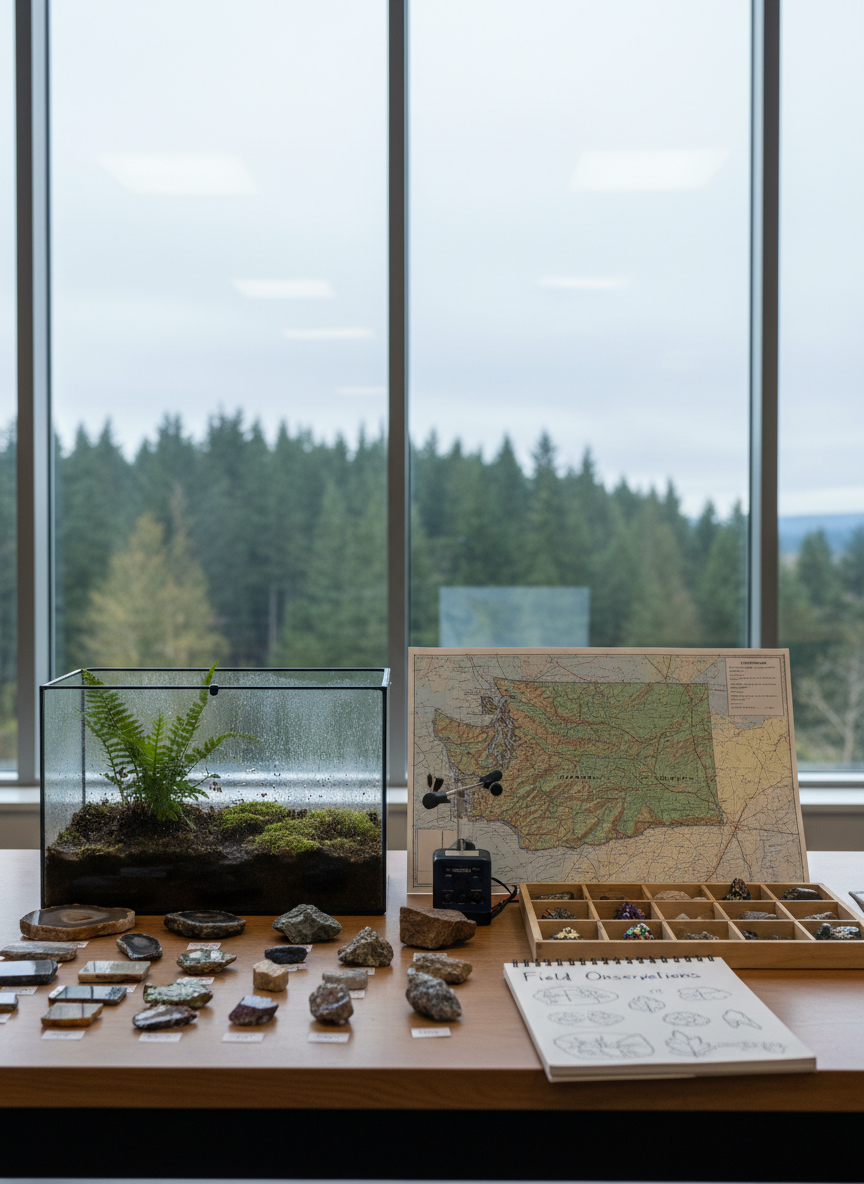
An Earth and environmental science lab setup inspired by the Pacific Northwest, showing a wide lab table covered with neatly arranged rock and mineral samples, a clear terrarium tank with moist soil and ferns, and a topographic map of Washington state spread partially open. A small weather station sensor kit sits beside a spiral notebook titled “Field Observations.” Through large windows in the background, soft-focus silhouettes of evergreen trees appear under an overcast sky, reinforcing the regional setting. Diffused natural light fills the room, creating soft highlights on glass and plastic surfaces and barely-there shadows. Photographed from an eye-level, wide framing, the composition balances indoor materials with the outdoor landscape beyond. The atmosphere is calm, inquisitive, and regionally grounded, rendered in realistic, professional photography that emphasizes hands-on Earth science learning.

About Us

Learn how we support rigorous, joyful science education for homeschooling families.

Hands-On Science for Homeschoolers

PNW Home Science Academy offers lab-based, inquiry-driven classes designed specifically for homeschooling families. We blend rigorous experimentation with curiosity and creativity, helping students build confidence in real science while keeping the wonder of discovery alive.
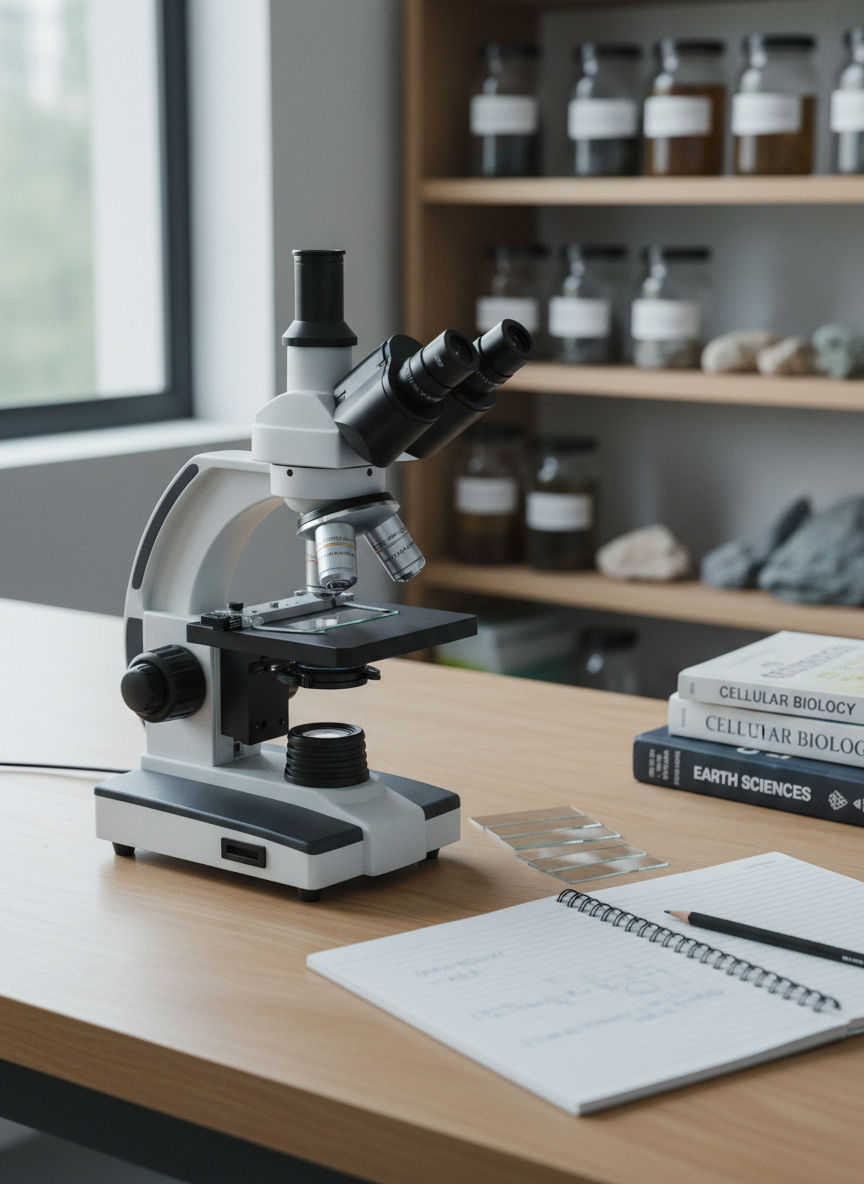
A close-up view of a modern black-and-white compound microscope on a smooth light wood lab bench, surrounded by carefully arranged glass slides, a spiral-bound lab notebook with neatly ruled lines, and a sharpened graphite pencil. In the softly blurred background, shelves hold labeled specimen jars, rock samples, and neatly stacked science textbooks. Cool, diffused window light from the left creates subtle highlights on the microscope’s metal surfaces and gentle shadows on the bench, enhancing its precise contours. Shot from a slightly elevated, three-quarter angle with a shallow depth of field, the microscope is in crisp focus while the background softly recedes. The mood is focused and studious, with clean photographic realism and a professional, organized atmosphere ideal for a science academy homepage.

Courses

High School Biology

Explore cells, genetics, and ecosystems through microscope work, dissections, outdoor investigations, and other laboratory work. Students will keep a laboratory notebook and be expected to to complete about 2-3 hours of homework per week to earn one high school laboratory science credit.

Text used: CK-12, Illustrated Guide to Home Biology Experiments

Middle School Physical Science

Investigate matter, energy, and motion with hands-on chemistry reactions, physics demonstrations, and earth science projects. Students will keep a laboratory notebook and will have about an hour of homework each week.

An Earth and environmental science lab setup inspired by the Pacific Northwest, showing a wide lab table covered with neatly arranged rock and mineral samples, a clear terrarium tank with moist soil and ferns, and a topographic map of Washington state spread partially open. A small weather station sensor kit sits beside a spiral notebook titled “Field Observations.” Through large windows in the background, soft-focus silhouettes of evergreen trees appear under an overcast sky, reinforcing the regional setting. Diffused natural light fills the room, creating soft highlights on glass and plastic surfaces and barely-there shadows. Photographed from an eye-level, wide framing, the composition balances indoor materials with the outdoor landscape beyond. The atmosphere is calm, inquisitive, and regionally grounded, rendered in realistic, professional photography that emphasizes hands-on Earth science learning.

Middle School Chemistry

Engaging, lab-focused chemistry for 6th–8th grade homeschoolers, exploring foundational concepts like atoms, molecules, reactions, and states of matter through hands-on experiments and activities.

Curriculum: American Chemical Society Middle School Chemistry

Elementary

Chemistry for Kids

Come learn about the amazing world of chemistry, the fun way. All activities are hands-on to get students excited about science. Students will learn how to keep a scientific notebook to document everything that they learn.

Elementary

Physics is Phun

Hands-on physics explorations through motion, forces, light, and simple machines. Students will experiment, build, and test their ideas while practicing clear, age-appropriate lab recording and scientific thinking.

Class Dates

  • Monday High School Biology OR Middle School Physical Science September 14- December 14 and January 4- May 17
  • Monday Chemistry for Kids (Elementary)September 14-November 16; January 11-March 22; Workshops April 12-May 17
  • Wednesday High School Biology OR Middle School Chemistry September 16-December 16; January 6-May 19
  • Wednesday Physics is Phun (Elementary)September 16-November 18; January 13-March 24; Workshops April 14-May 19

Instructor: Andrea Fosler

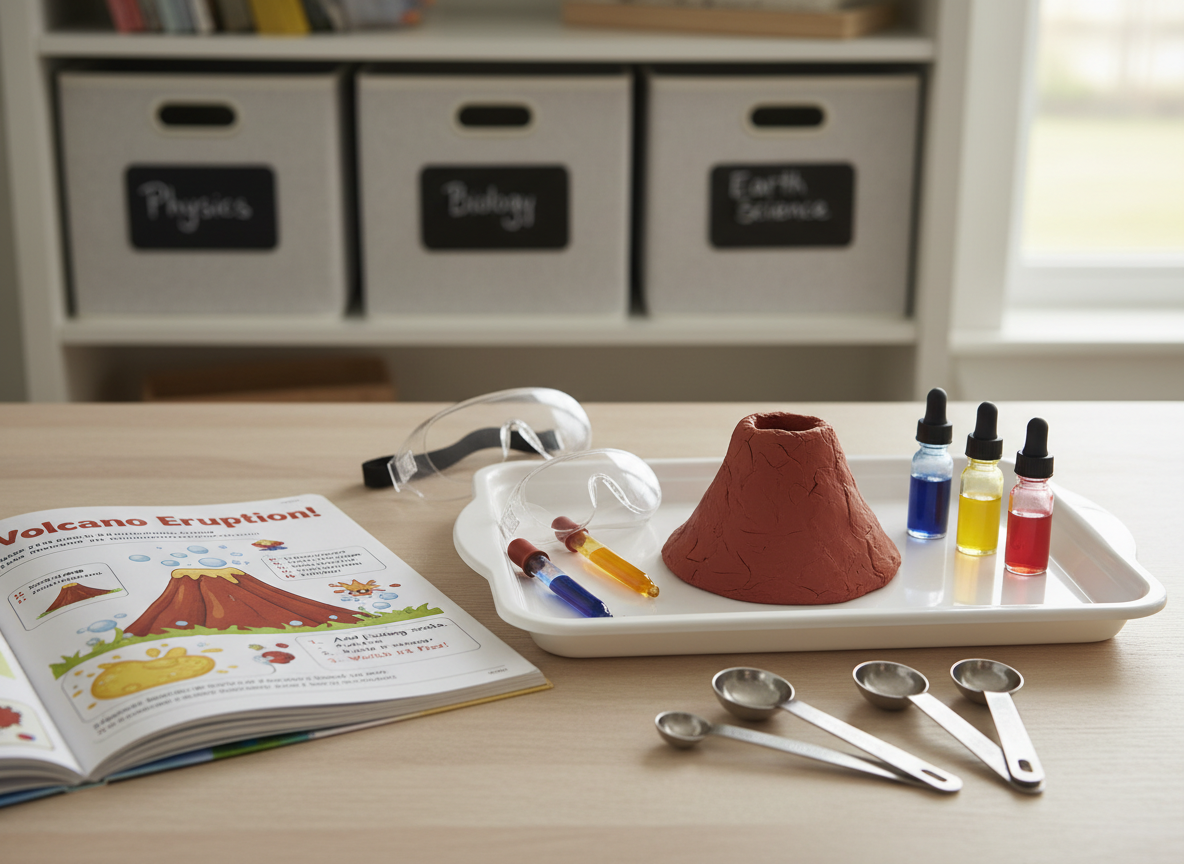
A detailed tabletop scene of an elementary-level home science activity, showing a light wooden table set with clear plastic safety goggles, a small baking soda volcano built from clay on a white tray, food coloring droppers, and measuring spoons. Nearby, a colorful, illustrated science workbook lies open to a simple experiment page with diagrams and large headings. In the softly blurred background, a bookshelf holds bins labeled “Physics,” “Biology,” and “Earth Science.” Gentle afternoon natural light filters through an unseen window, casting warm, diffused illumination and tiny highlights on the plastic and liquid surfaces. Photographed at a slightly elevated angle with moderate depth of field, the volcano and tools are sharply focused while the room fades softly. The atmosphere is playful yet structured, emphasizing hands-on learning in a clean, professional, photographic style.

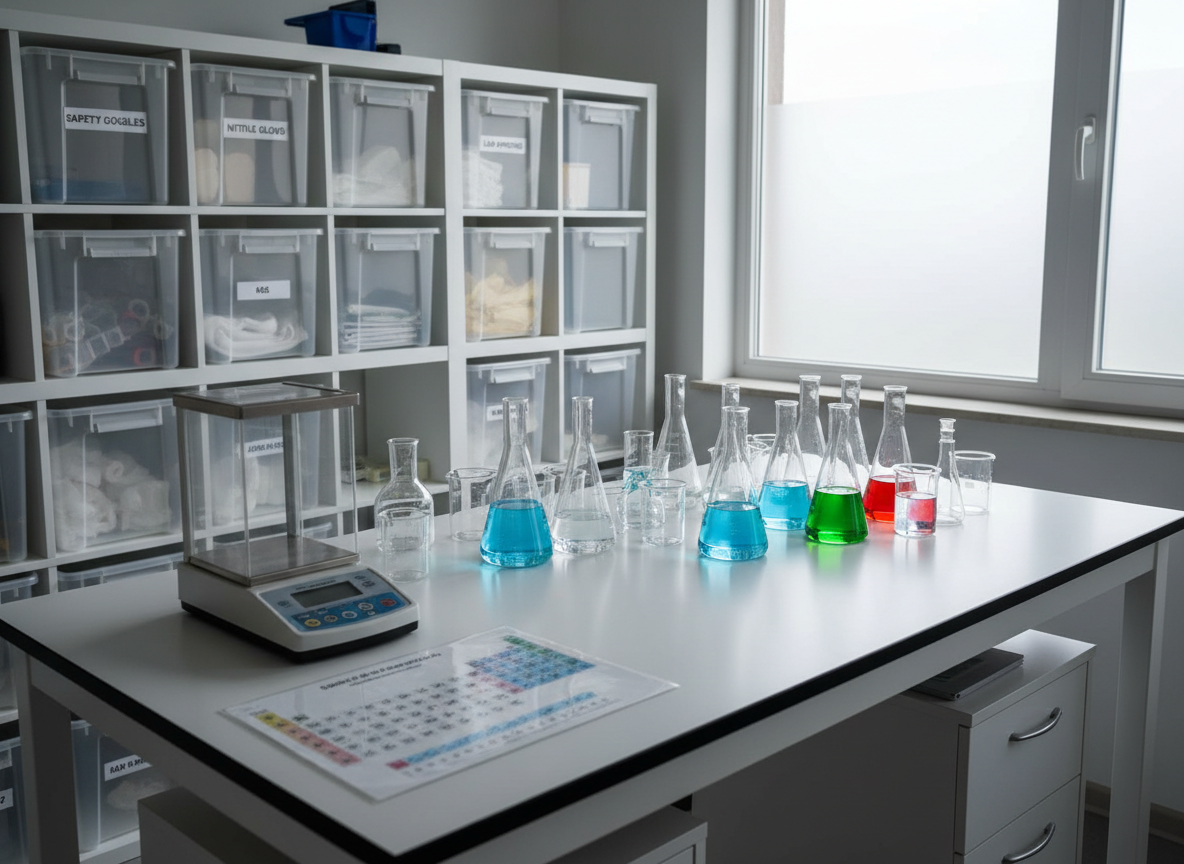
A bright, organized chemistry workstation in a dedicated homeschool lab, featuring a sturdy white lab table with a grey chemical-resistant surface, neatly grouped colorful liquids in Erlenmeyer flasks and beakers, a digital scale, and a laminated periodic table lying flat. Behind the station, tall shelving holds labeled plastic bins of safety goggles, nitrile gloves, and lab aprons. Soft, overcast natural light from a large window to the right bathes the scene, producing mild reflections on the glassware and gentle shadows under each object. Captured from a slightly elevated, wide-angle perspective with sharp detail throughout, the composition balances the table in the foreground and the storage system in the background. The mood is orderly, safe, and professionally academic, rendered in crisp photographic realism with understated, natural colors that fit a serious yet welcoming science education site.

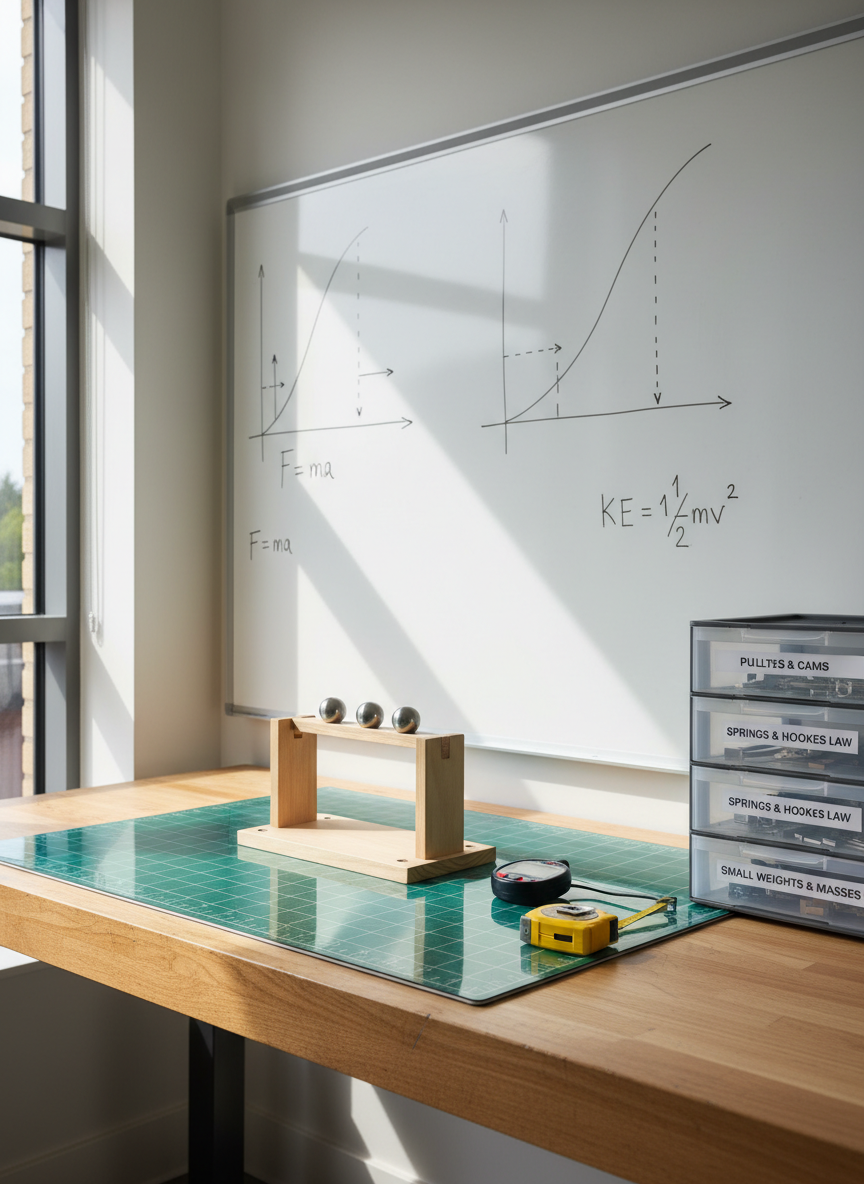
A physics and engineering corner in a home science academy classroom, featuring a sturdy light wood workbench covered with a clean cutting mat, a simple wooden ramp setup with steel balls ready for motion experiments, a neatly coiled measuring tape, and a digital timer. On the wall behind, a whiteboard displays carefully drawn motion graphs and vector arrows. To the side, clear plastic bins contain labeled components like pulleys, springs, and small weights. Soft, overcast daylight from a high side window casts gentle, directional light that reveals subtle textures in the wood and metal, with mild shadows that add depth. Captured from a slightly low, three-quarter angle, the ramp leads the viewer’s eye into the frame. The mood is analytical and exploratory, conveyed through clean, modern photographic realism with a professional, STEM-focused character.

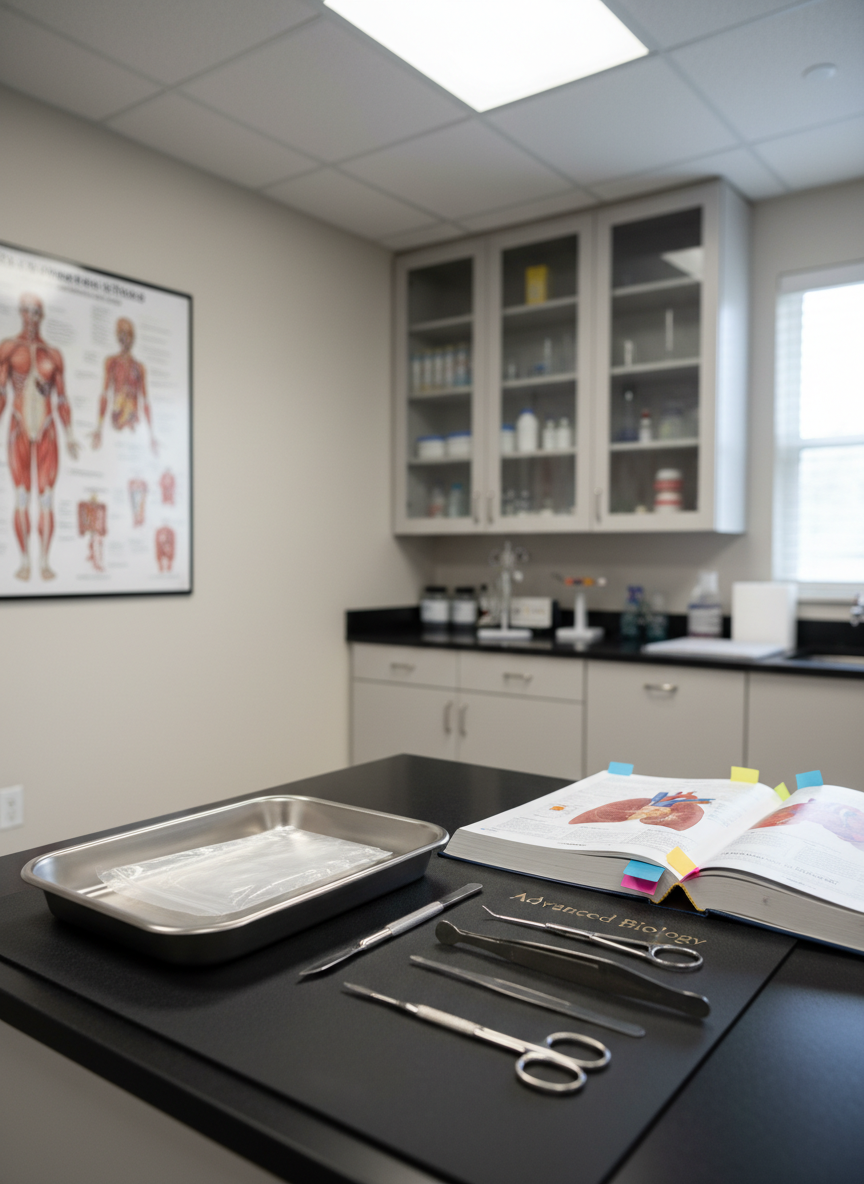
A polished lab station tailored for high school biology in a homeschool science academy, featuring a dissection tray with a closed, unused specimen bag beside stainless-steel dissection tools neatly aligned on a dark rubber mat, all spotless and pristine. Nearby, a textbook titled “Advanced Biology” lies open to a detailed anatomical diagram, with colored sticky tabs marking important sections. In the background, tall cabinets with frosted glass doors conceal additional supplies, while a wall-mounted chart of human body systems adds context. Cool, neutral overhead lighting combines with faint, diffused window light to create even, shadow-free illumination that feels clinical yet approachable. Shot from an eye-level, side-on perspective with sharp focus, the composition emphasizes professionalism, safety, and readiness for serious study in a realistic, photographic style.

Location, Labs, and Safety

Located just south of Snohomish, our small-group classes meet in a fully equipped home laboratory with professional-grade tools and safety equipment. We separate sessions by elementary, middle, and high school, tailoring experiments and expectations to each age level.

An Earth and environmental science lab setup inspired by the Pacific Northwest, showing a wide lab table covered with neatly arranged rock and mineral samples, a clear terrarium tank with moist soil and ferns, and a topographic map of Washington state spread partially open. A small weather station sensor kit sits beside a spiral notebook titled “Field Observations.” Through large windows in the background, soft-focus silhouettes of evergreen trees appear under an overcast sky, reinforcing the regional setting. Diffused natural light fills the room, creating soft highlights on glass and plastic surfaces and barely-there shadows. Photographed from an eye-level, wide framing, the composition balances indoor materials with the outdoor landscape beyond. The atmosphere is calm, inquisitive, and regionally grounded, rendered in realistic, professional photography that emphasizes hands-on Earth science learning.